Journal
Why Your Award Submission Photos Aren't Working
The mistakes that cost firms recognition, and the compositional shifts that change outcomes.
You submitted your best project. You wrote the description carefully. The floor plans were clean. The entry fee was paid. And then the results came back and your name wasn't on the list.
It's a frustrating experience, especially when you know the project was strong. The design was thoughtful. The construction was meticulous. The client was thrilled. So what went wrong?
In most cases, it wasn't the project. It was the photography.
I've seen exceptional work lose to lesser projects because the submission images didn't communicate what made the design special. Award judges evaluate anonymously, usually from a screen in a boardroom hundreds of kilometres away. They never visit the project. They never meet the builder. The photographs are the primary evidence they use to score your work against the category criteria. When the photography falls short, no amount of good design can compensate.
Here are the most common reasons award submission photos fail, and what to do differently next time.
You Shot for Marketing, Not for Judging
This is the most common mistake and the hardest to recognize. Your website photography and your award photography serve fundamentally different audiences with different evaluation criteria.
Marketing imagery is designed to create an emotional response. It's atmospheric, moody, and styled to look aspirational. The twilight shot with warm light glowing through every window. The perfectly staged living room with a coffee table book and a cashmere throw. These images work beautifully on Instagram and on your website. They attract clients.
But award judges are not clients. They're industry professionals evaluating design merit. They want to see spatial clarity, material legibility, and design intent. They want to understand why the floor plan works, how the materials were chosen, and what the relationship between the building and its site achieves. An atmospheric twilight shot tells them the house looks nice at dusk. It doesn't tell them why the window placement is significant or how the kitchen connects to the living space.
If your submission photos were pulled from your marketing library without being curated for the specific category criteria, they weren't doing the job judges needed them to do.

Your Images Don't Support Your Written Claims
Award submissions typically include written descriptions where you explain why the project excels against the category criteria. Innovation in materials. Integration with the environment. Energy efficiency. Spatial design. Whatever the criteria, your text makes claims about the project's merits.
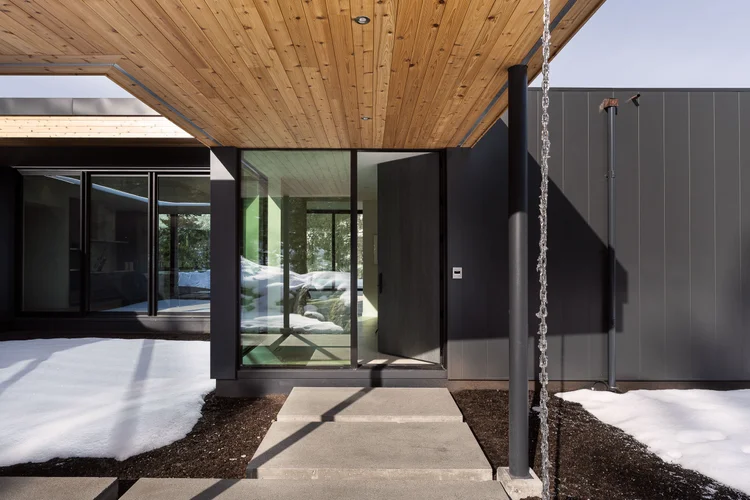
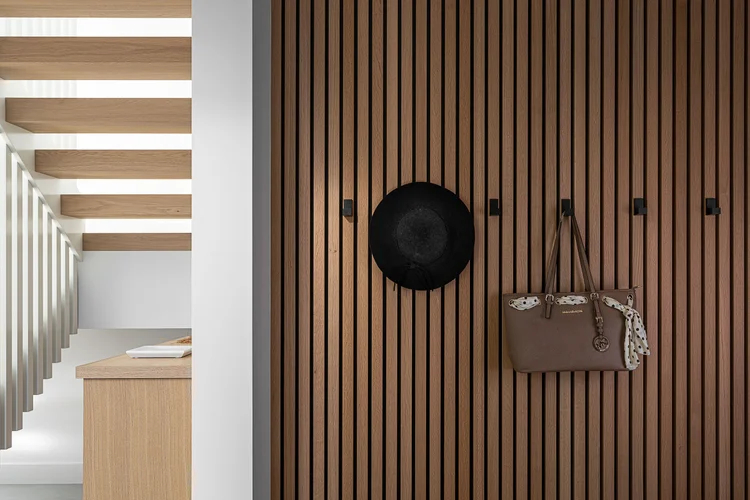
Now look at your photographs. Do they visually substantiate every claim you made in the text? If you wrote about innovative material intersections, is there a close-up detail shot that shows the junction between the cedar and the steel? If you wrote about integration with the natural landscape, is there a context shot showing the building in its site? If you wrote about the open plan living experience, is there an interior that clearly shows how the spaces flow?
Judges read the text and then look at the images for confirmation. When the images don't support the claims, the submission feels disconnected. The text says one thing, the photos show something generic, and the jury can't evaluate what they can't see. This is where many submissions fall apart: not because the photography is bad, but because it wasn't composed with the written submission in mind.
The Verticals Aren't Straight
This sounds like a minor technical issue. It's not. Corrected verticals are the baseline expectation of professional architectural photography. When the vertical lines of walls, doors, and windows lean inward or outward, the image looks amateur. It signals to judges that the photography wasn't done by a specialist.
Judges process hundreds of submissions. They develop pattern recognition for quality. Within two seconds of seeing an image with converging verticals, a judge has already formed an impression of the entry's professionalism. That impression colours how they evaluate everything else in the submission.
If your photographer doesn't correct verticals in every single architectural image, they're not an architectural photographer. This is not optional. It's the equivalent of submitting architectural drawings with crooked walls.
You Don't Have Enough Range
A common submission contains five or six images: a couple of exteriors, a couple of interiors, maybe a detail shot. For most award categories, that's not enough range to tell the full story of the project.
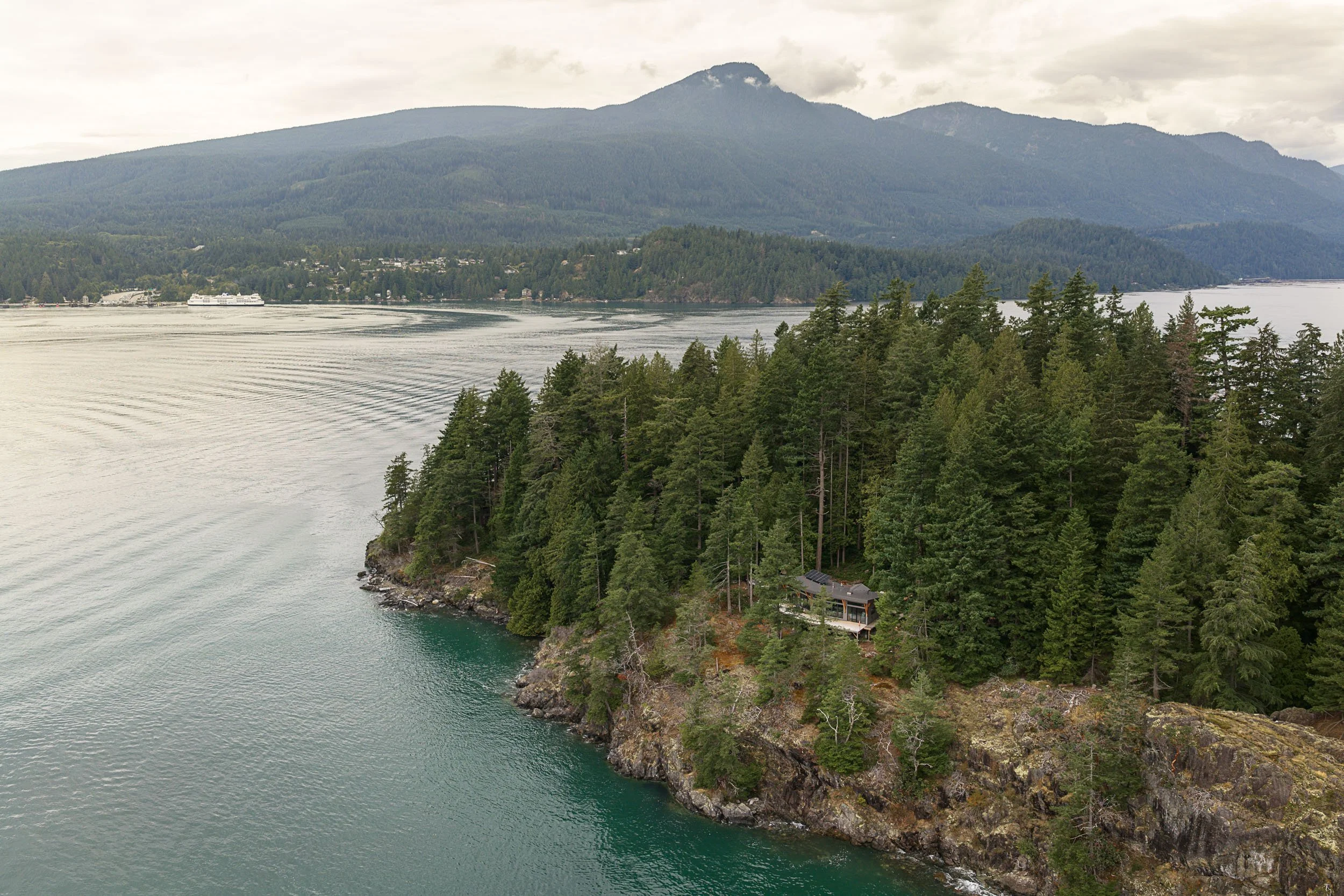
Judges need to understand the project as a whole. They need to see the exterior in context. They need to see how the entry sequence leads to the main living space. They need to see the kitchen, the primary suite, the material details. They need to see the building at different times of day. They need an aerial view that shows the site strategy.
A strong submission typically uses every available image slot. If the program allows 10 images, submit 10 images. But they should be 10 intentionally different views that each communicate something specific about the project. Not 10 variations of the same living room from slightly different angles.
Range means variety of subject (exterior, interior, detail, aerial, twilight), variety of scale (wide establishing shots down to tight material close-ups), and variety of purpose (each image should support a different claim in your written submission).
The Editing Is Too Heavy
Several award programs explicitly prohibit major alterations to submission images. CHBA Edmonton's rules state that "no major alterations are permitted beyond colour correction." HAVAN judges evaluate on submitted materials alone. Even programs that don't explicitly restrict editing will have judges who can spot over-processed images.
Sky replacements, heavy HDR processing, extreme colour grading, and artificial contrast all undermine the credibility of the submission. They make the project look like a rendering rather than a real space. And they raise a question in the judge's mind: if the photographs are enhanced this aggressively, what does the project actually look like?
The most effective submission photography looks natural. The light looks real. The colours look accurate. The space looks like a place you could walk into. Restraint in editing communicates confidence in the design. If the project is strong, the photography should be able to let it speak without artificial enhancement.
You Didn't Plan for the Submission
This is the root cause behind most of the other problems. The photography was an afterthought. It wasn't planned around the specific award program, the specific category criteria, or the specific claims the written submission would make. It was shot for general purposes and then retroactively crammed into a submission form.
The best award submissions are planned backwards. Start with the category criteria. Identify the claims you want to make in the written description. Then design the shot list around those claims, so every photograph directly supports a specific point of evaluation.
This means the photographer needs to understand the award program before the shoot. They need to know which category you're entering, what the criteria are, and how judges will evaluate the images. If your photographer hasn't asked about any of this, they're shooting for general purposes, not for an award.
You're Submitting the Same Photos Everywhere
The Georgie Awards, HAVAN Awards, and CHBA National Awards have different category structures, different evaluation cultures, and different numbers of allowed images. Using the exact same set of photos for every program is like submitting the same cover letter to every job application. It might be good, but it's not tailored.
A strategic shoot produces enough variety that you can curate different image sets for each program. The Georgie submission might lead with the twilight exterior and emphasize material details. The HAVAN submission might lead with the context shot and emphasize spatial flow. The CHBA National submission might emphasize the site strategy and the energy performance.
Same project, same photography session, but the selected images and their order are chosen specifically for each program's criteria and evaluation style. This curation is where submissions move from "entered" to "finalist."
The Timing Was Wrong
A project shot in November, three months after the homeowner moved in, with dead landscaping, a grey sky, and personal furniture in every room will never compete with a project shot in September, before handover, with intentional staging and golden autumn light.
Timing affects every aspect of the submission photography. The season determines the quality of light, the state of the landscaping, and the atmospheric conditions. The phase of occupancy determines whether the staging reflects the design intent or the homeowner's personal taste. The time of day determines whether interiors have natural light or rely entirely on artificial fixtures.
The best time to shoot for awards is before the homeowner moves in, during the season when the project's orientation takes best advantage of natural light. For most BC projects, that means late summer or early fall. If you miss that window, you're compromising the submission before a single frame is captured.
Fix It for Next Time
Plan backwards from the category criteria. Identify what judges are scoring, then design the shot list to provide visual evidence for every point.
Brief your photographer on the award program. Share the call for entries document. Discuss which category you're entering and what the evaluation criteria are.
Shoot before the homeowner moves in. Full staging control, pristine surfaces, no personal items competing with the design story.
Build in range. Exterior context, entry sequence, spatial flow, material details, aerial, twilight. Every image slot should serve a distinct purpose.
Curate separately for each program. Don't submit the same 8 photos to every award. Select and order based on each program's criteria.
Keep the editing natural. No sky replacements, no heavy HDR, no aggressive colour grading. Let the design speak.
Align images with your written description. Every claim in the text should have a corresponding photograph. If you can't show it, don't claim it.
The Difference Between Finalist and Winner
At the finalist level, every project is strong. The construction quality is high. The design is thoughtful. What separates winners from finalists is often not the project itself but how clearly the submission communicates the project's merits to a judge who has never visited it.
That communication happens through photography. Images that are intentional, well-composed, technically excellent, and strategically aligned with the evaluation criteria. Images that make the judge understand, in seconds, what makes this project worth recognizing.
If you've been submitting strong work and not getting the results you expected, the photography is the most likely place to find the problem and the most efficient place to fix it. See how we approach this work on our award and publication imagery service page.
Contact
Submitting next year? Let's plan it now.
The best award imagery isn't retrofitted from your marketing library. It's planned from the start.
or email info@mattanthonyphoto.com
Matt Anthony Photography
Architecture and interiors photography across British Columbia
Squamish · Whistler · Pemberton · Sunshine Coast · Vancouver · Fraser Valley · Okanagan · Salt Spring · Invermere