Journal
Architectural Photography in Whistler: What Makes Mountain Projects Different
Alpine light, snow load, elevation, and the seasonal timing that changes everything.
Whistler is not Vancouver. That sounds obvious, but the distinction matters more than most people realize when it comes to photographing architecture. The light behaves differently. The weather changes faster. The relationship between building and landscape is more dramatic and more fragile. And the seasonal window for exterior photography is narrower than clients expect.
I've been photographing custom homes in the Sea-to-Sky corridor for years, from Squamish through Pemberton and everywhere in between. The challenges are consistent. So are the opportunities, if you know how to read the conditions and plan around them.
The Light Is Not What You're Used To
Whistler sits at 50 degrees north latitude in a valley flanked by mountains on both sides. This means two things that fundamentally affect architectural photography. First, the sun angle is lower than what you'd experience in Vancouver or the Lower Mainland, particularly from October through March. Second, the mountains on either side of the valley act as walls that block direct sunlight earlier in the afternoon and delay it in the morning.
In practical terms, a south facing home in Whistler Village might get direct sun from roughly 10am to 3pm in midwinter, while the same orientation in Vancouver would see light from 8:30am to 4pm. That's a dramatically compressed shooting window. For north facing facades, you may have no direct sunlight at all during the winter months, only ambient light reflected off snow and sky.
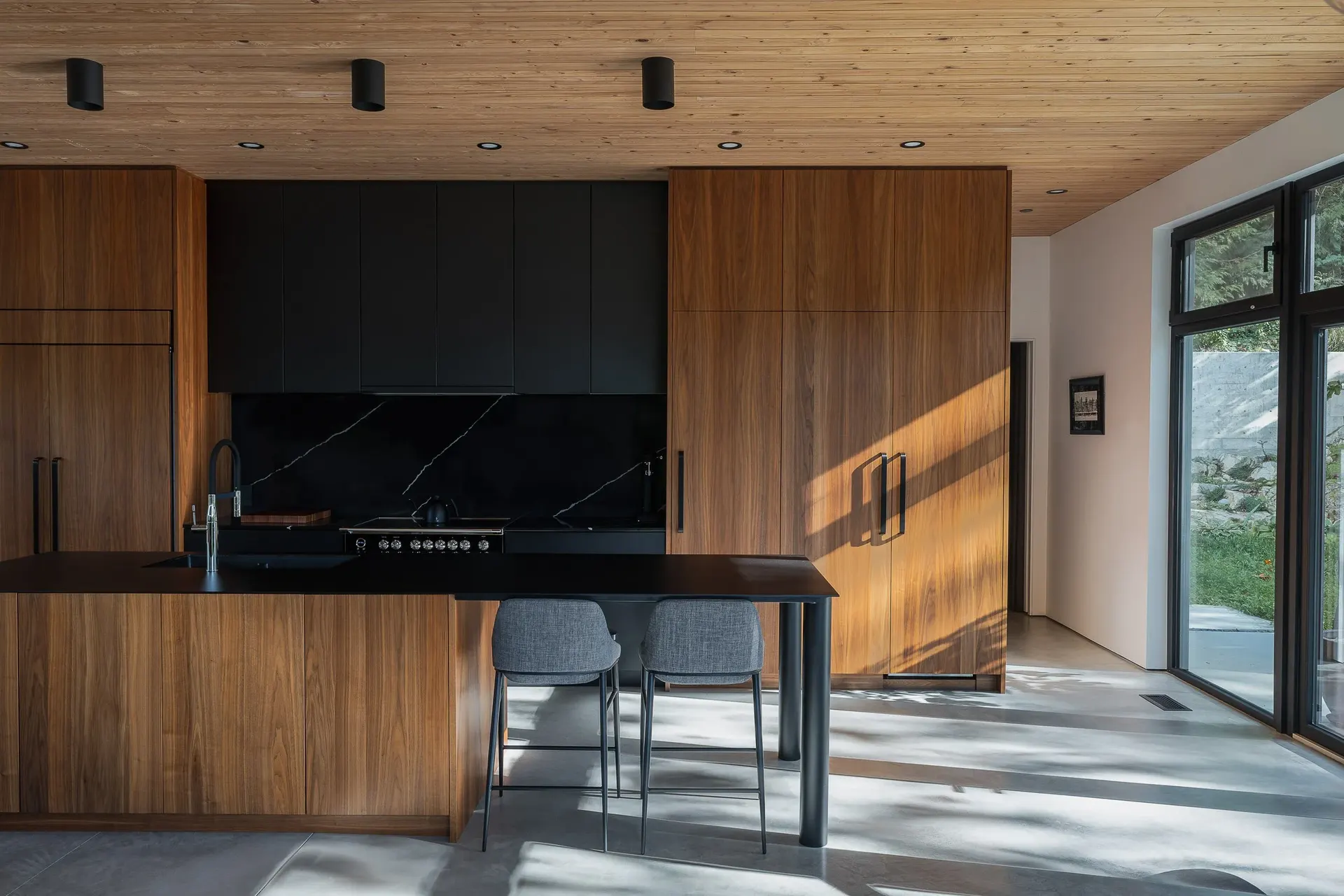
This isn't necessarily a problem. Overcast alpine light is beautiful for interiors, because it's soft, even, and doesn't create the harsh contrast that direct sun pushes through floor to ceiling glass. But it requires a different approach to planning. You can't assume that "afternoon light" means what it means at sea level.

Snow Changes Everything
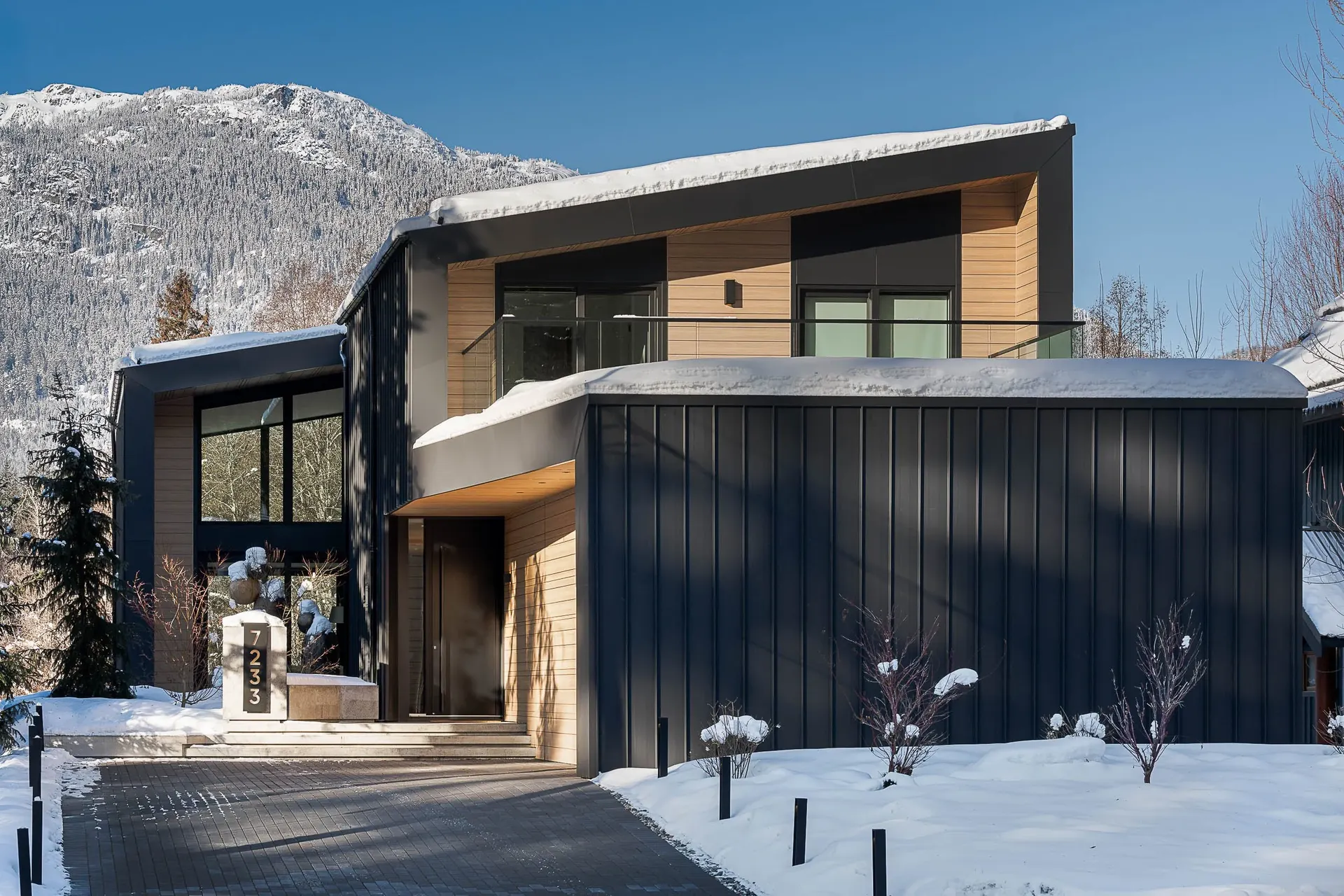
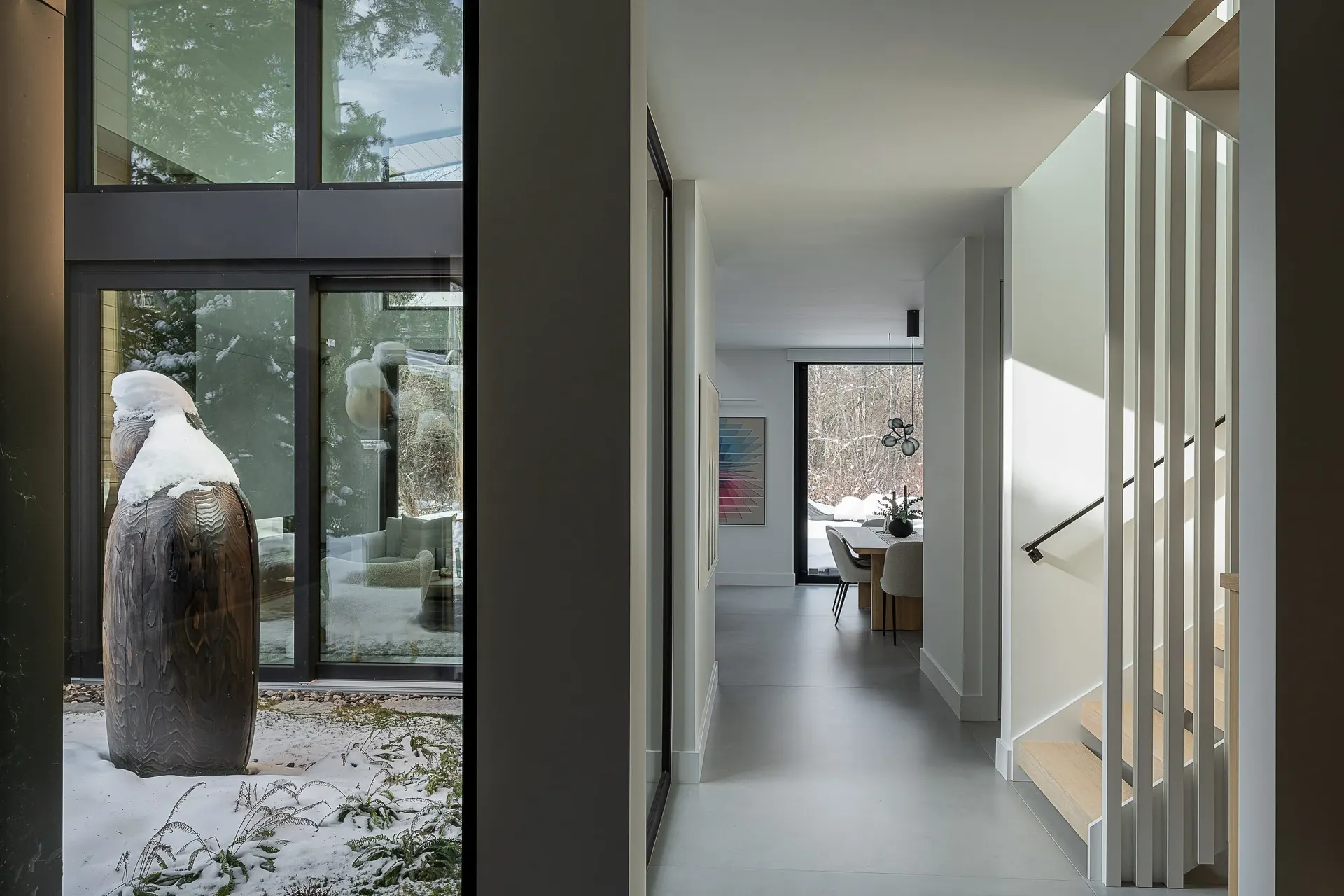
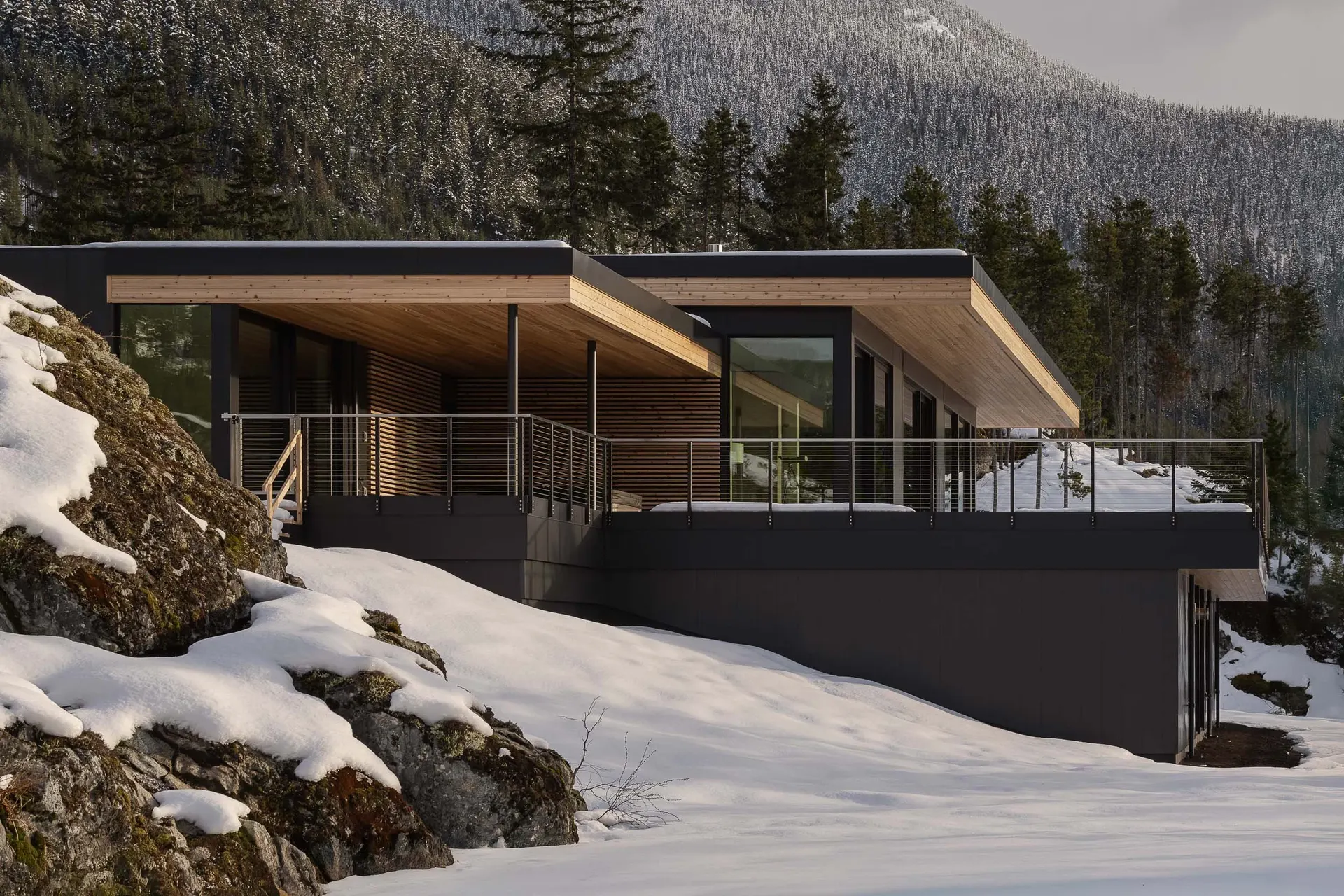
Snow is the single most defining element of Whistler architectural photography, and the one that causes the most technical challenges. A fresh snowfall transforms a project. Rooflines become sculptural. Landscaping disappears, simplifying the composition. The contrast between warm interior light and cold white surroundings creates images with an emotional quality that no other season can match.
But snow is also an exposure nightmare. A snow covered scene reflects an enormous amount of light, and cameras meter for middle gray. Left on auto, every camera will underexpose a snow scene, turning white into muddy gray. The opposite is also true: if you expose for the snow, the dark cedar or metal cladding goes black. Managing this dynamic range, preserving detail in both the brightest highlights and the darkest materials, is the technical challenge that defines winter architectural photography in the mountains.
There's also the practical challenge of access. A project shot after a heavy snowfall may have unplowed driveways, buried pathways, and snow load on decks and railings that obscures architectural details. The best winter shoot days are typically 24 to 48 hours after a snowfall: fresh enough to look pristine, settled enough that access is manageable and key features are visible.
Snow on the roof tells a story about insulation and building performance, which matters if the project is being submitted for energy efficiency awards. Snow that melts unevenly or creates ice dams is a visual signal that judges notice. Clean, uniform snow load communicates quality construction.
The Twilight Window Is Extreme
Whistler's latitude creates dramatic seasonal variation in daylight. At the winter solstice, you get roughly eight hours of daylight. At the summer solstice, you get over sixteen and a half hours. This has a direct impact on twilight photography.
In December, the sun sets around 4:15pm, which means twilight shooting happens between 4:30 and 5pm. That's a 30 minute window at most, and it coincides with the time when most homeowners are arriving home, turning on lights, and starting dinner. If the project hasn't been staged and every interior light isn't on before 4pm, you've missed the window.
In summer, the situation reverses. The sun doesn't set until after 9pm, and true twilight doesn't arrive until 9:30 or later. This means a summer twilight shoot in Whistler can stretch to 10pm, which is extraordinary for the quality of light but requires a client and a homeowner who are willing to accommodate a late schedule.
Spring and fall offer the most workable twilight windows: sunset around 6 to 7pm, with a 30 to 45 minute shooting window that feels neither rushed nor unreasonably late. For most Whistler projects, late September through mid October is the sweet spot: the light is warm, the deciduous trees are turning, and the twilight window is civilized.
Seasonal Shooting Windows for Whistler
December to February: 8 hours of daylight. Twilight window 4:15 to 4:45pm. Best for snow covered exteriors and warm interior contrast. Plan shoot day around snowfall timing.
March to April: 12 to 14 hours of daylight. Transitional season. Snow may be patchy and inconsistent. Often the weakest period for exterior photography unless a late season storm delivers fresh cover.
May to June: 15 to 16.5 hours of daylight. Twilight after 9:30pm. Landscaping fills in. Best for green season exteriors and sites with significant landscape integration.
July to August: Peak summer. Long golden hours but haze from wildfire smoke is increasingly common. Have a backup plan. Smoke can create dramatic warm light but kills views and context.
September to October: 11 to 13 hours of daylight. Twilight around 6:30 to 7pm. Often the best overall shooting season. Autumn colour, clean air, workable schedule.
November: 9 hours of daylight. Pre-snow season. Landscape is dormant and often grey. Generally the least desirable month for exterior architecture unless the project is predominantly interior focused.
Elevation Creates Micro Climates
Whistler Village sits at about 670 metres above sea level. Properties on Blackcomb benchlands are at 750 metres. A project in Alpine Meadows or on the upper slopes of Whistler Cay might be at 800 metres or higher. That elevation difference matters more than people expect.
A project at 800 metres may be socked in cloud while the village is clear. Or the reverse: the valley fills with fog while upper elevation properties sit in sunshine above the cloud layer. I've driven to a shoot in Whistler Village in rain, gone up to a benchlands property, and found clear sky and perfect light.
This means flexibility isn't just polite, it's essential. A rigid "we're shooting Tuesday from 10 to 4" schedule doesn't work in the mountains. The best results come from a plan that allows the photographer to respond to conditions: start with interiors during overcast periods, move to exteriors when the light breaks, and be prepared to extend the day if the conditions warrant it.
It also means the site visit matters more in Whistler than it does in the city. Understanding the orientation, the elevation, and the relationship between the project and the surrounding terrain lets the photographer predict where light will come from and when, and identify the views that will be most compelling under different conditions.

The Landscape Is the Co-Author
In Vancouver, a custom home is typically understood in relation to its neighbourhood: the street, the lot, the adjacent properties. In Whistler, the landscape is the primary context. A home in Kadenwood relates to the Tantalus Range. A home in White Gold relates to the ski runs on Blackcomb. A home on Alta Lake relates to the water and the mountains beyond it.
This means context views, the wide shots that show the building in its setting, are not just nice to have. They're essential to understanding the project. A tightly cropped interior shot of a Whistler living room could be anywhere. A wider shot that includes the floor to ceiling windows framing the Coast Mountains tells the entire story of why this project exists in this location.
Drone photography is particularly powerful in Whistler for this reason. An aerial view that shows the project's relationship to the mountain, the valley, the ski runs, or the lake provides a context that no ground level photograph can achieve. It also communicates the site strategy, which is often the most significant design decision in a mountain build.

Material Palettes Read Differently at Elevation
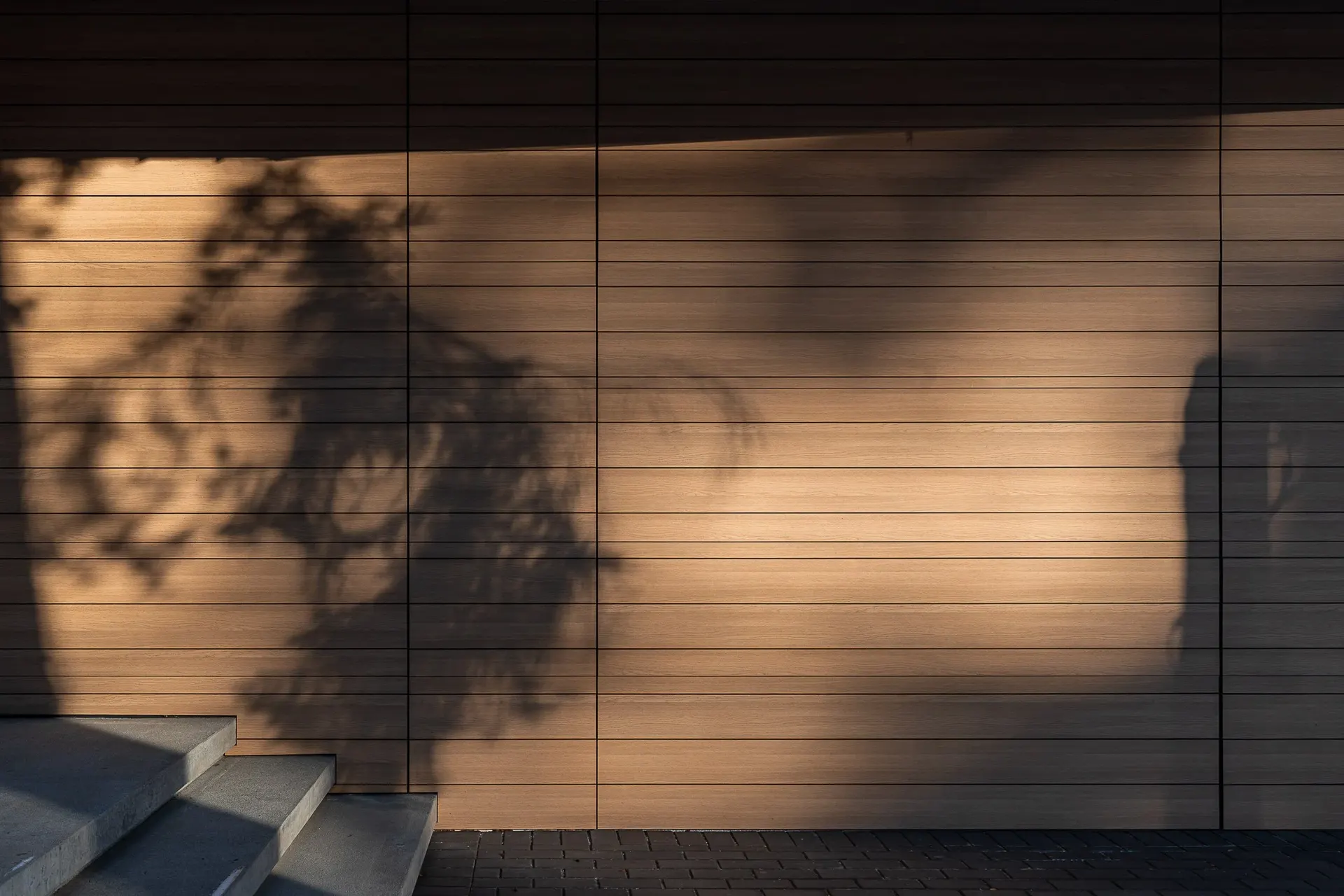
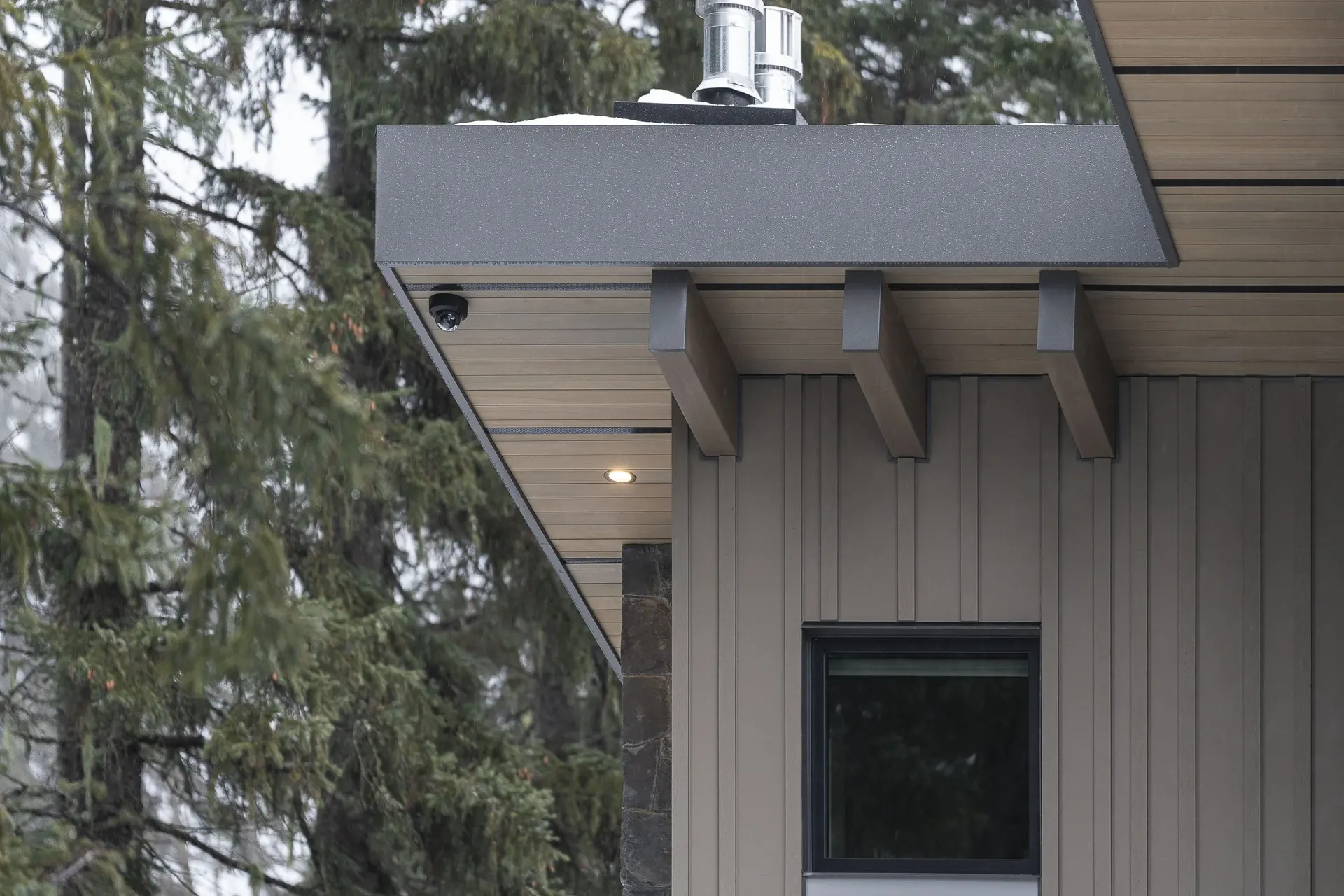
The material choices that define Whistler architecture, weathered cedar, standing seam metal, exposed concrete, blackened steel, all interact with mountain light differently than they do at sea level. Cedar weathers faster in alpine conditions and develops a silver grey patina that looks entirely different from the warm honey tone it has when first installed. Metal roofing reflects the sky, which in Whistler can shift from deep blue to flat white to pink alpenglow within an hour.
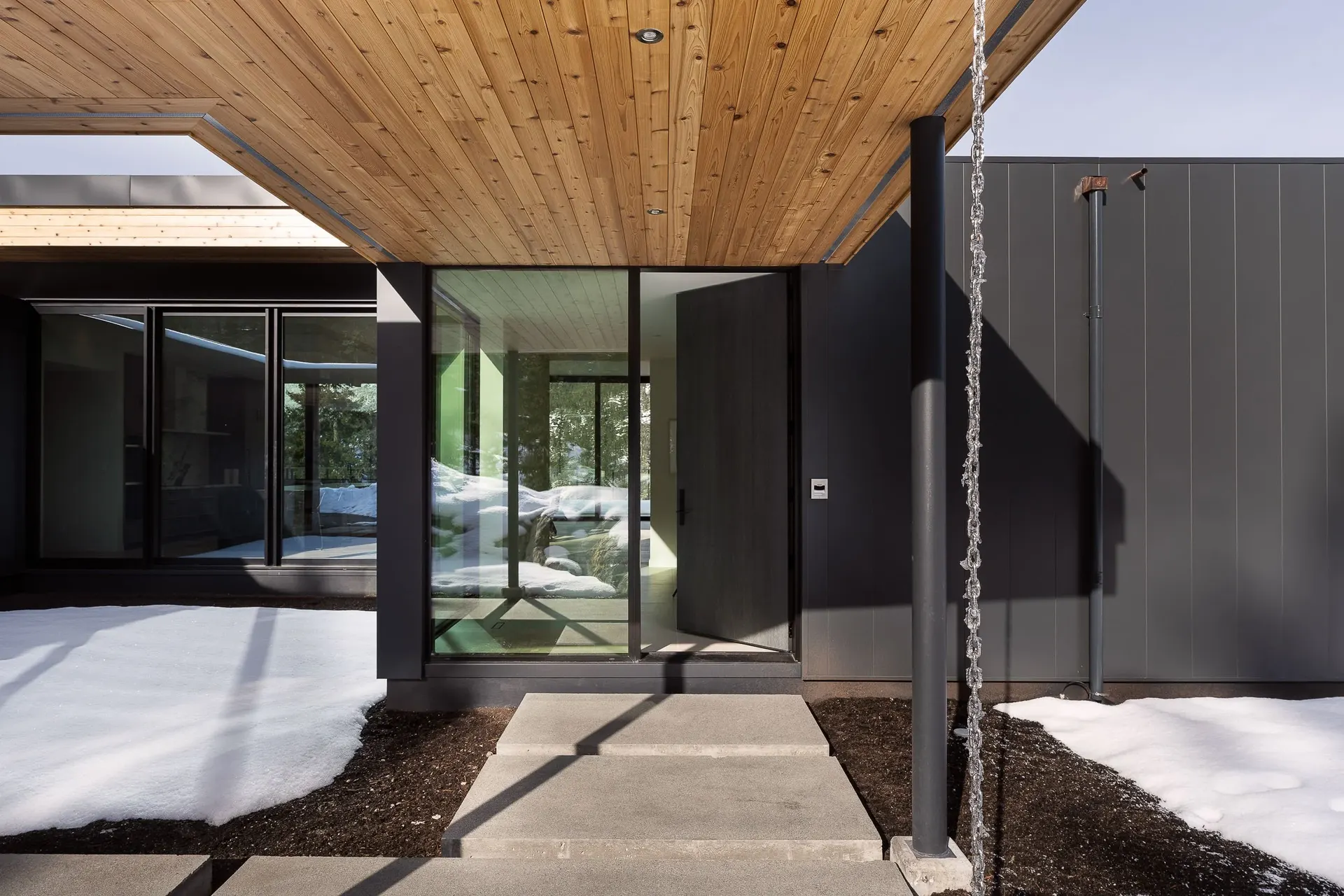
These materials also read differently against snow. Dark cladding against white ground creates high contrast compositions that are inherently dramatic. Light materials against snow can lose definition. Understanding this interplay between material palette and environmental context is what separates an architectural photographer who knows Whistler from one who's visiting for the first time.
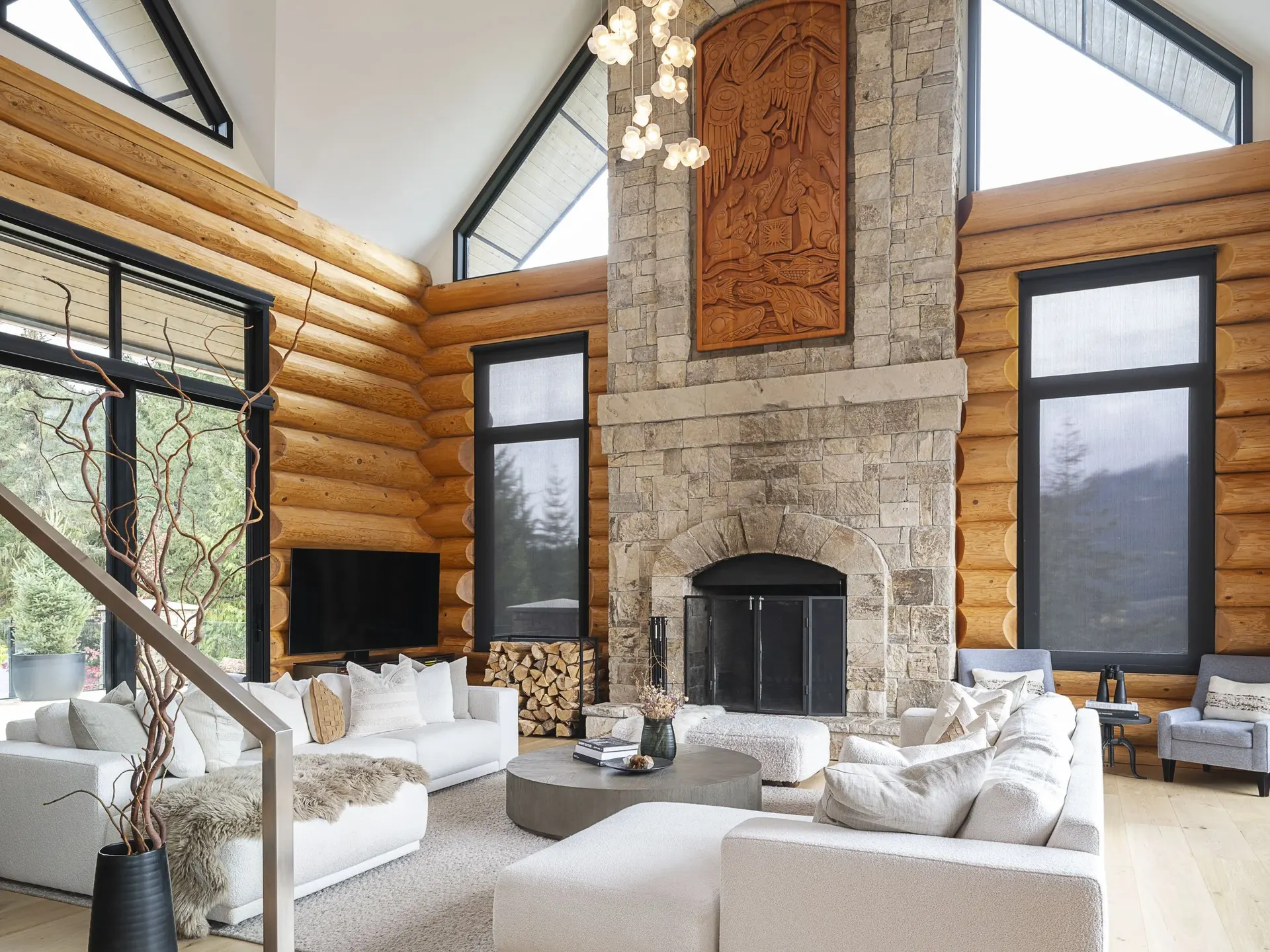
The same is true for interior materials. The warm wood tones that dominate many Whistler interiors, walnut, fir, hemlock, respond beautifully to the soft, diffused light that alpine overcast provides. The key is recognizing that this light is an asset, not a limitation, and composing interiors that use it to reveal grain, texture, and warmth.
Working With Bears, Snow Plows, and Short Windows
Mountain photography has practical complications that urban photography doesn't. In fall, bears are active and occasionally wander through properties, particularly those near creeks or forested lots. In winter, the sound of snow plows and snow clearing equipment can disrupt video work. In spring, meltwater creates puddles and mud that compromise exterior staging.
None of these are insurmountable. They're just realities that require a photographer who has worked in these conditions before, who knows the seasonal rhythms, and who can adapt without losing the quality of the output. The first time you lose a twilight window because the homeowner's driveway hasn't been plowed, you learn to build contingency into every mountain shoot.
Why It Matters for Your Project
If you've built something in Whistler, Pemberton, or anywhere in the Sea-to-Sky corridor, the photography needs to be approached differently than it would be in Vancouver. The light, the weather, the landscape, and the seasonal timing all create constraints that require specific knowledge and experience.
But they also create opportunities that don't exist anywhere else. A snow covered contemporary home glowing against a mountain backdrop at dusk is one of the most compelling images in residential architecture. The challenge is being in the right place, at the right time, with a plan that accounts for everything the mountains throw at you.
That's what separates local knowledge from a photographer making the drive up from the city for the day.

Building in the mountains?
Let's plan a shoot that works with the conditions, not against them. Local knowledge makes the difference.
Book a Discovery Call